Web development is a skill I've seemingly been avoiding for the past 10 years.
Before I entered college, the "development boot camp" boom was starting out. Local and international companies were hosting new bootcamps every month to get everyone started in the areas they required, mostly web development and QA. They would give free courses, train everyone in the basic tasks, hire the top 5% of students, and start the process again. This trend died down at around the time of the pandemic, but for the few years it was around, it was one of the best career choices you could make to get a well-paid job at a respectable company without a degree (with benefits like remote work, which wasn't that common at the time). Not everyone is cut-out to work in software, but many of my friends took this route and now are amazing professionals, working at the top of their fields.
I wanted to do Bioinformatics, and unfortunately for me there was no getting around a degree. Apparently companies need some guarantee that you know what you are doing before letting you mess around with other people's health. So I spent a few years working on it, learning the basics and then the not-so-basics of math, statistics, molecular biology, genetics, machine learning, modelling, and programming in C++.
Halfway through all that I ran into Python, and it messed up my brain. I fell in love with the language that had a library for everything, and suddenly most of my problems had simple-enough solution. Why spend a month learning how to solve a differential equation system by hand when you can solve it in 3 lines using Sympy? Why write the logic for a multilayer perceptron in MATLAB of all things, when you can install Keras and have it working in three sentences?
Of course, the questions are only rhetorical. Someone had written Sympy, and Keras, and everything else I was using, and the point of the degree was to give me the skills to be that person If I wanted to. I was trained not to just use the standard tools used in bioinformatics, but to be able to write them myself, and that's what I did once I graduated.
"Lo atamos con alambre?" UI style.
Being able to tell the difference between the times where you can and can't take a shortcut is one of the most valuable skills I developed. Sometimes you need to learn how something works, understand it's flaws and limitations, and build a better tool that completes the task in the best, most optimal way. Other times you just need the damn thing done, get a good enough result and move on to something else.
UI, for me, was always a means to an end. When it came time to show my work, libraries like streamlit were a godsent, where I could build a simple, good looking app in 15 lines, get my results out there, and have users test them. I knew that more work was needed to get a "Real" UI working, but since my job was not building the UI but the things that make the UI necessary, I avoided putting in the work like the plague.
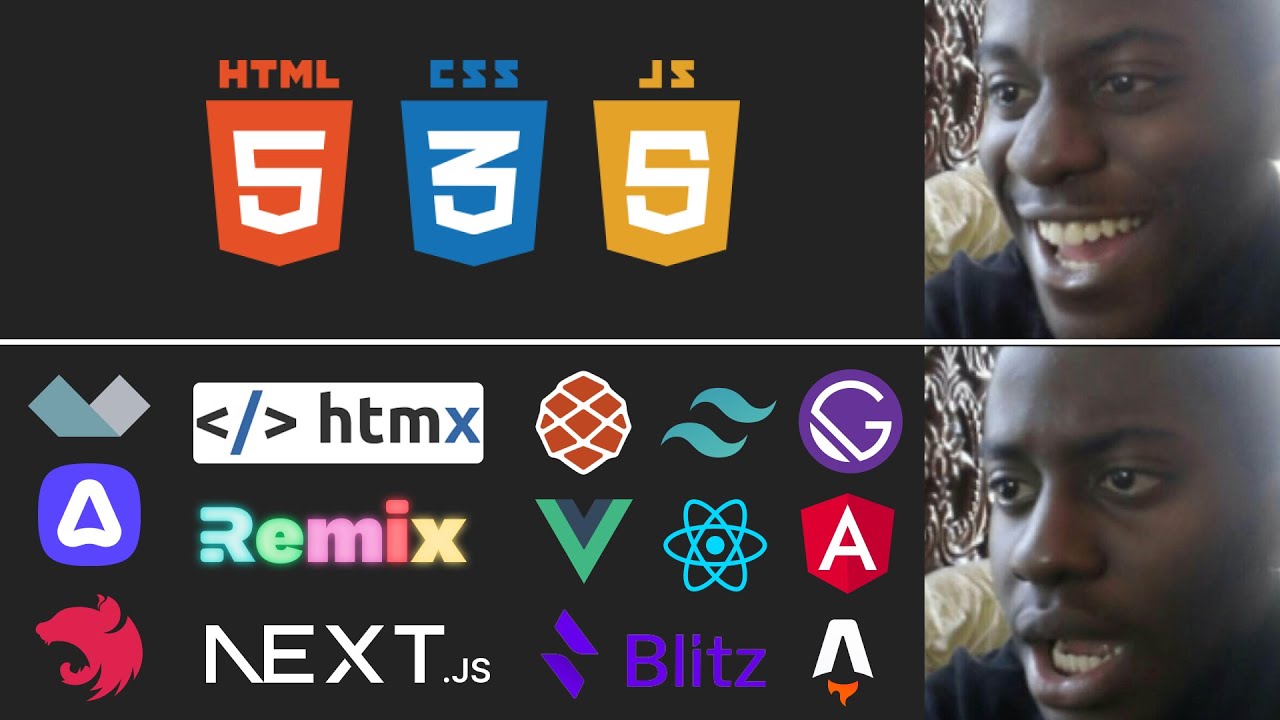
I tried to learn web development many times before, but always with the same results. To me, HTML, CSS and Javascript were three whole new languages that I needed to learn to start building websites, and I was too busy learning all the other stuff that put food on my table. To make things worse, no one builds websites using the basics of the programming language, they use libraries (libraries so large they call them frameworks), just like I do in Python. But no matter how I approached it, all I got to show for my effords were either ugly, old, 2000s looking websites, or carbon copies of tutorials that I didn't really understand how they worked.
The other issue was that for me, learning Python was had a more clear, straighforward path. After you learn how to assign a variable and use a for loop, you can ask yourself "What do i want to do with this", and find a library yo do so. You need computer vision? Use OpenCV. Do you want to do deep learning? Import pytorch. Working with tables? Pandas. Need a plot? Plotly. Of course it isn't that straightforward, there's polars instead of pandas, matplotlib instead of plotly, and tensorflow instead of pytorch if you worked at Google and are forced to use it. But we have go-tos, where you can't go wrong. You can get the core functionality out of those libraries with three lines of code, see if you like them and swap them around otherwise.
But from an outsiders perspective, it seems like those damn web developers can't get their act together! My issue with web was always the commitment. You can't just switch frameworks halfway through, you might as well switch from learning Spanish to Italian, yeah it's easier to learn one after you know the other, but if you are starting out you will only get more confused. Every time I started the process of learning it started with 15-40 unknown boiler plate files and a 40-hour course on top of the three new languages and auxiliary libraries (just npm install these!), just to get a hello world equivalent.
So, this is my attempt at getting around to it. This personal website of mine is just an excuse to learn how to do the damn thing, see what I like, what I don't' and document the process for the next person that comes after me. I'm writing this first post in a word document before even creating the repo, so If you are reading this, I don't know how good or bad the website you are on is, but I'm glad you are reading it.